Online Therapy for Anxiety: Does It Really Work?
Clinical evidence is growing — and millions of Americans are finding real relief through virtual mental health care.
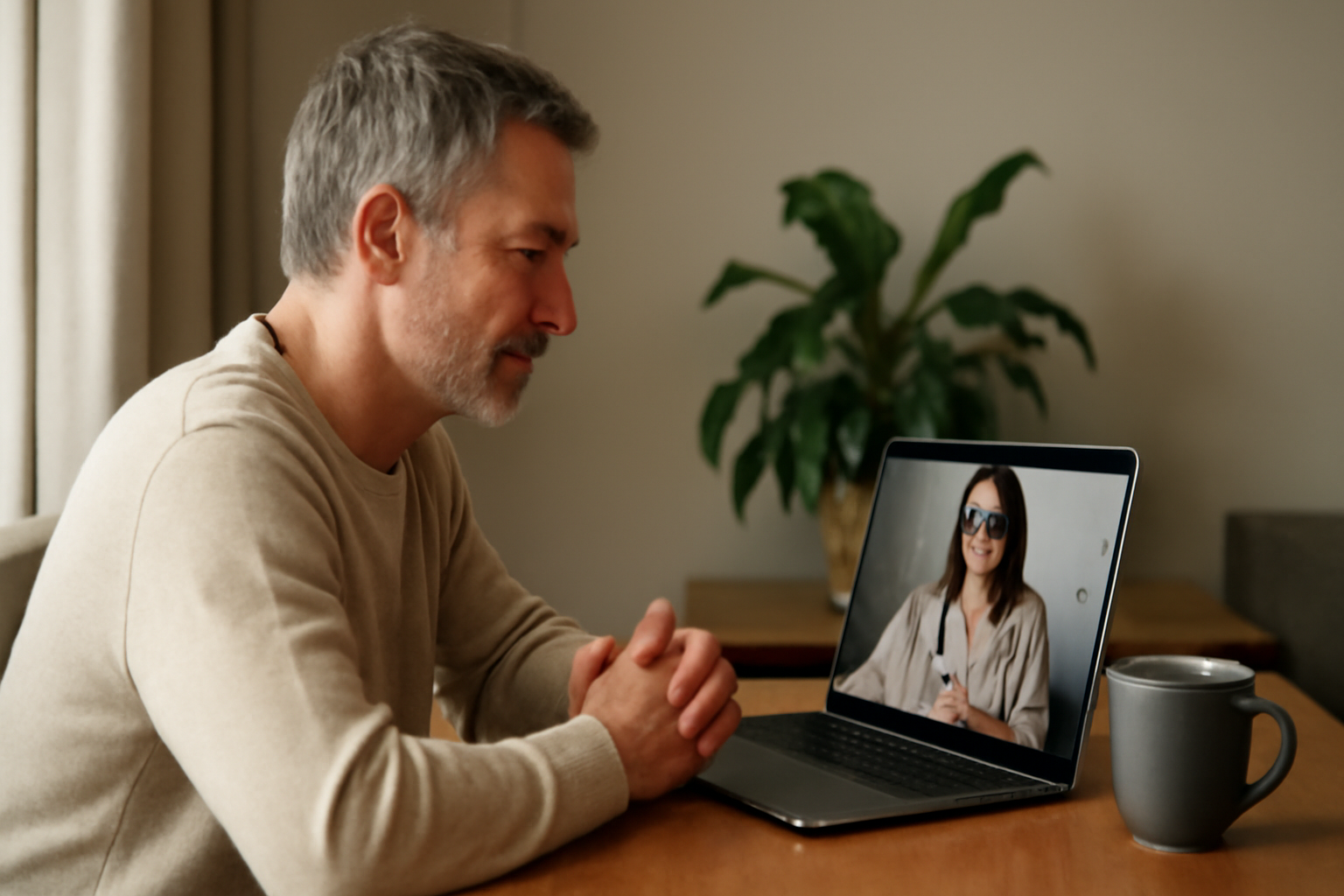
Marcus, 44, had been waking up at 3 a.m. for months, heart racing, mind cycling through worst-case scenarios about his job, his health, and his family. He knew something was wrong, but the idea of sitting in a waiting room, explaining it all to a stranger, felt like one more thing to dread. Then his physician mentioned online therapy — and everything changed.
If that story sounds familiar, you’re far from alone. According to the National Institute of Mental Health (NIMH), anxiety disorders are the most common mental illness in the United States, affecting more than 40 million adults every year. Yet fewer than 37% of those people ever receive treatment.
Online therapy — sometimes called teletherapy or virtual therapy — has become one of the most accessible ways to close that gap. But does it actually work? Is it safe? And is it right for you? This guide breaks down everything you need to know, from the clinical evidence to what a first session actually looks like.
What Is Online Therapy for Anxiety?
Online therapy is a form of professional mental health treatment delivered through digital platforms — typically via video calls, phone sessions, or secure messaging — rather than in-person office visits. Licensed therapists, psychologists, and counselors provide the same evidence-based treatments they would in a traditional setting, just through a screen.
For anxiety specifically, the most commonly used approach is Cognitive Behavioral Therapy, or CBT. CBT is a structured, short-term treatment that helps you identify negative thought patterns, challenge them, and replace them with more realistic, balanced thinking. It has decades of clinical research behind it and is considered a first-line treatment by organizations like the American Psychological Association (APA).
Other modalities delivered online include Acceptance and Commitment Therapy (ACT), Exposure and Response Prevention (ERP) for specific phobias or OCD-related anxiety, and mindfulness-based stress reduction (MBSR). Your therapist will help determine which approach fits your specific symptoms and goals.
Online therapy is not the same as mental health apps, chatbots, or self-help programs — though those tools can serve as useful complements. What distinguishes online therapy is the presence of a licensed, credentialed human clinician who assesses your condition, creates a treatment plan, and provides ongoing, personalized care.
Signs and Symptoms: What Kind of Anxiety Are We Talking About?
Anxiety isn’t a single condition — it’s an umbrella term covering several distinct disorders, each with its own symptom profile. Recognizing where your experience falls can help you get the right kind of help.
Common early or mild signs of anxiety include:
- Persistent worry that feels hard to control
- Restlessness or feeling "on edge"
- Fatigue that doesn’t improve with rest
- Difficulty concentrating or mind going blank
- Irritability or emotional reactivity
- Muscle tension, especially in the neck or shoulders
- Sleep disturbances — trouble falling or staying asleep
More advanced or severe symptoms may include:
- Panic attacks — sudden surges of intense fear with physical symptoms like chest pain, shortness of breath, and dizziness
- Avoiding places, people, or situations due to fear
- Physical symptoms with no clear medical cause (headaches, GI distress, racing heart)
- Inability to function normally at work, home, or in relationships
- Intrusive, repetitive, or uncontrollable thoughts
A landmark 2020 meta-analysis published in JAMA Psychiatry confirmed that generalized anxiety disorder (GAD), social anxiety disorder, and panic disorder — three of the most prevalent forms — all respond significantly to online CBT, with effect sizes comparable to in-person therapy.
If you recognize several of these symptoms in yourself, speaking with a licensed therapist online can be a safe, effective first step. For a deeper look at anxiety disorders broadly, see our article on Anxiety Disorder: Symptoms, Causes & Treatment.
Causes and Risk Factors for Anxiety
Anxiety doesn’t have a single cause. Research consistently points to a combination of biological, psychological, and environmental factors — and understanding yours can actually make therapy more effective.
Biological factors:
- Genetics — having a first-degree relative with an anxiety disorder increases your risk by 30-40%, according to the NIH
- Brain chemistry imbalances involving serotonin, dopamine, and GABA
- Chronic inflammation, which emerging research links to anxiety and mood disorders
- Hormonal changes, particularly in perimenopause and thyroid dysfunction
Psychological factors:
- History of trauma or adverse childhood experiences (ACEs)
- Perfectionism, low frustration tolerance, or avoidance coping patterns
- Co-occurring depression, which affects nearly 50% of people with anxiety disorders
Environmental and lifestyle factors:
- Chronic stress from work, finances, caregiving, or relationships
- Poor sleep, sedentary behavior, and high-caffeine or high-alcohol intake
- Social isolation — a risk that surged dramatically during the COVID-19 pandemic years
The CDC reports that anxiety symptoms in US adults increased substantially between 2019 and 2022, with nearly 30% of adults reporting anxiety or depression symptoms at some point during that period. The demand for accessible, remote mental health care grew accordingly — and online therapy platforms scaled to meet it.
Does Online Therapy for Anxiety Actually Work? The Evidence
This is the question most people ask first — and the clinical answer is a clear, evidence-backed yes, with some important nuances.
A comprehensive 2021 systematic review published in World Psychiatry analyzed over 60 randomized controlled trials of internet-delivered CBT (iCBT) for anxiety disorders. The conclusion: iCBT produced clinically significant reductions in anxiety symptoms across all major anxiety disorder categories, with outcomes statistically equivalent to face-to-face therapy in most cases.
The American Psychological Association has endorsed telepsychology as an ethical and effective mode of delivering mental health care, provided certain standards for confidentiality, licensure, and clinical competence are met.
Here’s what the research suggests works best in online therapy for anxiety:
- Video-based sessions tend to outperform text-only or asynchronous messaging for complex anxiety disorders
- Structured CBT protocols with homework and between-session exercises produce stronger outcomes than supportive counseling alone
- Therapist-guided programs consistently outperform fully self-directed digital tools
- Consistency matters — research suggests a minimum of 8-12 sessions to see meaningful, lasting change
One area where online therapy may have a distinct advantage: access. For people in rural areas, those with mobility limitations, those with social anxiety that makes leaving home difficult, or people with demanding work schedules, virtual therapy removes barriers that often prevent treatment altogether. And treatment that happens is always more effective than treatment that doesn’t.
It’s worth noting that online therapy is not ideal for every situation. Severe psychiatric conditions, active suicidal ideation, or psychosis generally require in-person or higher-level care. Your primary care provider can help guide the right level of support for your specific needs.
If anxiety co-occurs with depression — which is common — you may also find our article on Depression Symptoms: Signs You Should Never Ignore helpful in understanding the full picture of what you might be experiencing.
What to Expect: From Finding a Therapist to Your First Session
Many people feel intimidated by the process of starting therapy — online or otherwise. Here’s a realistic walkthrough of what the experience actually involves.
Step 1: Choose a platform or find an independent therapist.
Major teletherapy platforms match you with therapists based on your concerns, availability, and preferences. You can also search independently through the Psychology Today therapist finder or your insurance provider’s directory, filtering specifically for video-based providers.
Step 2: Check credentials and specialization.
Confirm your therapist is licensed in your state (LCSW, LPC, LMFT, PhD, PsyD, or MD/psychiatrist). Verify they have specific experience treating anxiety disorders, not just general counseling.
Step 3: Insurance and cost.
Many major insurance plans now cover teletherapy at the same rate as in-person visits. The Mental Health Parity and Addiction Equity Act requires insurers to provide comparable coverage for mental and physical health services. Check your plan’s behavioral health benefits before assuming out-of-pocket cost. Our guide on Mental Health Coverage: What Your Health Insurance Really Pays For can help you navigate what to expect.
Step 4: Your intake session.
Your first session typically involves a comprehensive assessment — your symptoms, history, current stressors, medications, and treatment goals. This is not a test. It’s a conversation designed to help your therapist understand your specific situation.
Step 5: Ongoing sessions and homework.
Sessions typically run 45-55 minutes. Between sessions, you’ll likely be asked to complete thought records, behavioral experiments, or relaxation exercises. This between-session work is where much of the therapeutic change actually happens.
Living With Anxiety: Daily Strategies That Complement Online Therapy
Therapy is the cornerstone — but what you do between sessions matters too. Clinical evidence supports several lifestyle-based strategies as meaningful complements to professional treatment.
Regular physical activity: A meta-analysis in JAMA Psychiatry found that 150 minutes of moderate aerobic exercise per week reduced anxiety symptoms by approximately 48% in adults with diagnosed anxiety disorders. Even a 20-minute daily walk creates measurable changes in stress hormones.
Sleep hygiene: Anxiety and poor sleep reinforce each other in a vicious cycle. Maintaining consistent sleep and wake times, limiting screen exposure before bed, and keeping your room cool and dark can significantly reduce overnight anxiety symptoms.
Caffeine and alcohol awareness: Both substances are known anxiety triggers. Caffeine stimulates the same physiological arousal pathways as the fight-or-flight response. Alcohol initially reduces anxiety but increases it significantly in the rebound hours — a pattern that can worsen nighttime symptoms.
Diaphragmatic breathing: Clinical studies support slow, deep belly breathing as a technique that activates the parasympathetic nervous system and reduces acute anxiety within minutes. Many therapists teach this as a foundational skill in the first few sessions.
Social connection: Isolation amplifies anxiety. Even brief, low-pressure social interactions — a short phone call, a walk with a neighbor — can buffer against the cognitive distortions that fuel anxiety spirals.
When to Call Your Doctor or Seek Emergency Help
Online therapy is effective for a wide range of anxiety presentations — but there are situations where immediate, in-person professional care is necessary.
Call your doctor promptly if:
- Your anxiety symptoms have appeared suddenly and severely with no clear trigger
- You’re experiencing physical symptoms (chest pain, shortness of breath, numbness) that haven’t been medically evaluated — these need to rule out cardiac or neurological causes first
- Anxiety is severely impairing your ability to work, care for yourself, or maintain relationships
- You’re using alcohol or substances to manage anxiety symptoms
- Current medications seem to be worsening anxiety (some blood pressure drugs, steroids, and stimulants can do this)
Seek emergency care immediately if:
- You are having thoughts of harming yourself or others
- You experience a panic attack with chest pain, left arm pain, or loss of consciousness — always rule out cardiac emergency first
- You or someone you know is in a mental health crisis
You can reach the 988 Suicide and Crisis Lifeline by calling or texting 988, available 24/7 across the United States. If you’re in immediate danger, call 911 or go to your nearest emergency room.
Frequently Asked Questions
Is online therapy as effective as in-person therapy for anxiety?
For most anxiety disorders — including generalized anxiety disorder, social anxiety, and panic disorder — clinical research indicates that online CBT produces outcomes comparable to in-person therapy. The key factors are therapist quality, treatment structure, and your own consistency and engagement.
How long does online therapy take to work for anxiety?
Most people begin noticing meaningful improvement in symptoms after 6-8 sessions of structured CBT. Full treatment courses typically range from 12-20 sessions, though this varies based on symptom severity, co-occurring conditions, and individual response. Research suggests benefits are often maintained well beyond the end of treatment.
Can online therapy replace anxiety medication?
For mild to moderate anxiety, CBT alone is often highly effective. For more severe presentations, clinical evidence suggests that a combination of therapy and medication — prescribed and monitored by a physician or psychiatrist — may produce the best outcomes. This decision should always be made with a qualified healthcare provider, never independently.
What’s the difference between online therapy and a mental health app?
Online therapy involves a licensed human clinician who provides individualized, evidence-based care. Mental health apps offer tools, exercises, and psychoeducation — which can be helpful complements — but they are not a substitute for professional diagnosis or treatment, especially for clinical anxiety disorders.
Is online therapy private and confidential?
Reputable online therapy platforms use HIPAA-compliant encryption to protect your sessions and personal health information. You should confirm a platform’s privacy practices before enrolling. Licensed therapists are bound by the same confidentiality laws online as in person.
Conclusion
Anxiety is one of the most treatable conditions in mental health — and online therapy has made evidence-based treatment more accessible than at any point in history. If you’ve been putting off getting help because of time, cost, stigma, or simply not knowing where to start, virtual therapy may be exactly the bridge you’ve been waiting for.
The most important step isn’t choosing the perfect platform or reading every study. It’s making the first appointment. With the right therapist, a structured treatment approach, and your own willingness to engage, real, lasting relief is well within reach.
Talk to your primary care physician about your symptoms and ask for a referral to a licensed mental health professional — in person or online. You deserve support that meets you where you are.
Medical Disclaimer: This article is for informational and educational purposes only. It does not constitute medical advice, diagnosis, or treatment. Always consult your physician or a qualified healthcare provider before making changes to your health routine or treatment plan.
Medically reviewed by our editorial health team. Content follows evidence-based standards aligned with CDC and NIH guidelines.