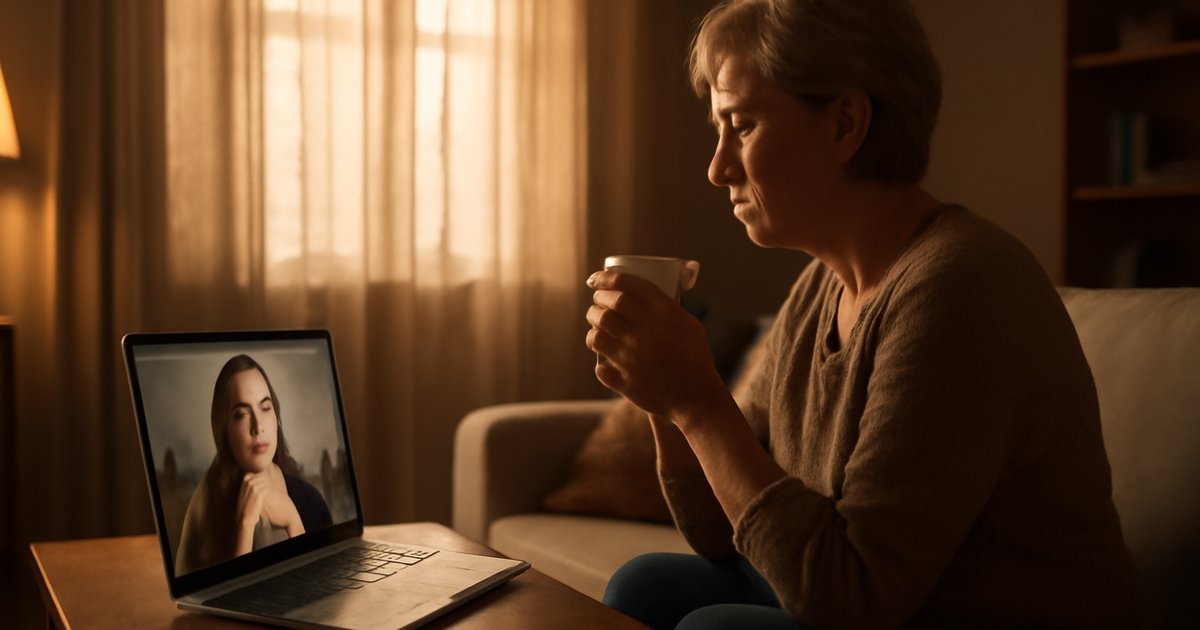
Losing someone you love can feel like the ground disappearing beneath your feet — and finding support should not require you to leave home.
James, 54, lost his wife of 28 years to pancreatic cancer. For months afterward, he barely left the house. The idea of sitting in a therapist’s waiting room, holding back tears in front of strangers, felt unbearable. Then a friend mentioned online therapy. Within a week, he was speaking with a licensed grief counselor from his kitchen table — still in his flannel shirt, coffee in hand.
Grief is one of the most universal human experiences, yet it remains one of the least talked-about mental health challenges in the US. According to the American Psychological Association, approximately 2.5 million Americans die each year, meaning millions more are left to navigate profound loss. Yet research consistently shows that fewer than one in three bereaved adults seeks professional mental health support.
In this guide, you will learn how online therapy for grief and loss works, what the clinical evidence says, what types of therapy are most effective, and how to know when you or someone you love needs professional help.
What Is Grief — and When Does It Become a Clinical Concern?
Grief is the natural emotional, physical, and cognitive response to loss. It can follow the death of a loved one, but also the end of a marriage, a serious diagnosis, job loss, or any significant life change. Bereavement — specifically grief after a death — is one of the most studied forms.
Most people move through acute grief over months to years, gradually integrating the loss into their lives. This is considered a normal, healthy process. However, clinical evidence indicates that roughly 10 to 15 percent of bereaved individuals develop what is now formally recognized in the DSM-5-TR (the Diagnostic and Statistical Manual of Mental Disorders) as Prolonged Grief Disorder (PGD) — formerly called complicated grief.
PGD is characterized by intense, persistent grief lasting more than 12 months after a loss (6 months for children) that significantly impairs daily functioning. According to the NIH, PGD is associated with increased risk of depression, anxiety, substance use disorders, and even suicidal ideation.
Understanding the difference between natural grief and a condition requiring professional support is one of the most important distinctions your doctor or therapist can help you make.
Signs and Symptoms: Normal Grief vs. When to Seek Help
Grief does not follow a rigid timeline or checklist. The classic "five stages" model — denial, anger, bargaining, depression, acceptance — is widely known but frequently misunderstood. Research from Yale and Harvard suggests grief is rarely linear, and most people cycle through these states rather than progressing in order.
Common signs of normal grief include:
- Intense sadness, crying, or emotional numbness
- Difficulty concentrating or making decisions
- Changes in appetite and sleep
- Social withdrawal or longing for the person who died
- Waves of emotion triggered by reminders (music, anniversaries, smells)
- Physical symptoms such as fatigue, chest tightness, or headaches
Signs that suggest professional support may be needed:
- Grief that feels as intense at 12+ months as it did in the first weeks
- Inability to carry out daily responsibilities at work or home
- Complete social isolation lasting months
- Persistent feelings of guilt, worthlessness, or hopelessness
- Use of alcohol or substances to cope
- Thoughts of self-harm or not wanting to be alive
- Inability to accept the reality of the loss
A 2021 study published in JAMA Psychiatry found that individuals with untreated PGD had significantly higher rates of cardiovascular events and immune dysfunction compared to those who received grief-focused therapy — underscoring why treatment matters.
What Is Online Therapy for Grief?
Online therapy for grief — also called teletherapy, e-therapy, or virtual counseling — delivers evidence-based psychological treatment through secure video calls, phone sessions, or asynchronous messaging platforms. You connect with a licensed therapist from wherever you feel safest and most comfortable.
Platforms such as BetterHelp, Talkspace, and therapist directories like Psychology Today now allow users to filter specifically for grief specialists. The American Psychological Association confirmed in 2023 that the use of telehealth for mental health services had grown by more than 38 times compared to pre-pandemic levels, and utilization among adults over 50 nearly tripled.
For those navigating grief, the accessibility of online therapy removes several significant barriers:
- No commute when leaving home feels emotionally exhausting
- Flexible scheduling around unpredictable emotional days
- Access to specialists who may not be available locally
- Continuity of care during travel or relocation
- Reduced stigma for those who may feel shame about needing support
This varies from person to person — some individuals strongly prefer the physical presence of an in-office therapist, and that preference is entirely valid. Online therapy is not a replacement for in-person care for everyone, but clinical evidence indicates it is an effective alternative for most.
Evidence-Based Therapies Used in Online Grief Counseling
Not all grief counseling is the same. Research suggests that specific therapeutic frameworks are more effective than general supportive talking, particularly for those with PGD or co-occurring depression and anxiety.
Complicated Grief Treatment (CGT) — developed by researchers at Columbia University — is currently the most evidence-supported therapy specifically designed for PGD. A landmark clinical trial published in JAMA found that CGT outperformed standard antidepressant therapy in reducing grief symptoms in more than 80 percent of participants. CGT has been successfully adapted for telehealth delivery.
Cognitive Behavioral Therapy (CBT) helps identify and reframe unhelpful thought patterns around loss — such as excessive guilt ("I should have done more") or catastrophic thinking ("I will never be okay again"). Multiple meta-analyses confirm CBT’s effectiveness for grief-related depression and anxiety delivered via online platforms.
Acceptance and Commitment Therapy (ACT) focuses on accepting painful emotions rather than fighting them, and on identifying values that guide action even in the presence of grief. Research from the NIH suggests ACT is particularly helpful for older adults navigating loss and existential concerns.
Narrative Therapy invites you to tell the story of your relationship with the person who died — including the loss — in a way that honors meaning and identity. This approach is especially valuable for those who feel their grief is not being "heard."
Online Support Groups facilitated by licensed therapists offer peer connection alongside clinical guidance. A 2022 meta-analysis in Death Studies found that therapist-led online grief groups produced significant reductions in PGD symptoms and social isolation over 12 weeks. For more on how virtual platforms support complex mental health needs, see our guide on Online Therapy for Trauma and PTSD: Does It Really Work?
Does Online Therapy for Grief Actually Work? What the Research Says
This is the question most people reasonably ask before committing time and money to any form of therapy.
The short answer: yes — clinical evidence is increasingly robust. A 2020 systematic review published in Clinical Psychology Review analyzed 17 randomized controlled trials of internet-based grief interventions and found statistically significant improvements in grief severity, depression, and anxiety compared to control groups. Effects were comparable to face-to-face therapy in most studies.
Researchers at Johns Hopkins have noted that the therapeutic alliance — the quality of the relationship between you and your therapist — is one of the strongest predictors of treatment outcome. Early concerns that this connection would be weaker online have not been borne out. Multiple studies confirm that patients rate their therapeutic relationships with online therapists as equally strong as with in-person providers.
That said, online therapy may be less appropriate for individuals with severe psychiatric conditions, active suicidality requiring crisis intervention, or those who lack stable internet access. Your primary care physician or a mental health professional can help determine the right level of care for your specific situation.
If you are also navigating anxiety alongside your grief, the article on Online Therapy for OCD: Does It Really Work? offers additional context on how structured online CBT programs perform across different conditions.
Living With Grief: Day-to-Day Strategies Alongside Therapy
Online therapy is most effective when combined with supportive daily practices. Research suggests — and most grief therapists recommend — an integrative approach that addresses emotional, physical, and social wellbeing simultaneously.
Maintain basic physical health routines. Sleep disruption, poor nutrition, and physical inactivity are common during bereavement and worsen psychological symptoms. The Mayo Clinic recommends prioritizing sleep hygiene and gentle movement — even 20-minute daily walks — as evidence-based mood stabilizers during grief.
Create rituals of remembrance. Research from Harvard Medical School indicates that meaningful rituals — lighting a candle on anniversaries, creating a memory box, or writing letters to the person who died — are associated with lower grief intensity and a greater sense of continued connection.
Limit social isolation without forcing social performance. You do not need to "be okay" around others. But gentle, low-pressure social contact — even brief check-ins with trusted friends — protects against the compounding effects of loneliness.
Be cautious with alcohol. Many bereaved individuals use alcohol to soften emotional pain. The CDC notes that alcohol use significantly increases in the year following a major loss, particularly in men. Alcohol is a depressant and worsens grief symptoms over time. Speak with your doctor if this is a concern. You can also read more in our resource on Diabetes and Alcohol: What Every Diabetic Must Know for context on how alcohol interacts with physical health conditions that may also be present.
Give yourself time — and professional support. One of the most harmful myths about grief is that it should resolve within a defined period. The goal of grief therapy is not to eliminate sadness, but to help you carry it in a way that allows you to live fully again.
When to Call Your Doctor or Seek Emergency Help
Grief is not always just emotional — it has measurable effects on cardiovascular health, immune function, and hormonal balance. Bereaved individuals face a significantly elevated risk of what researchers call the "widowhood effect" — studies published in PLOS ONE indicate that surviving spouses face a 66 percent increased risk of dying within the first three months following their partner’s death, primarily due to cardiovascular events and immune suppression.
Contact your doctor promptly if you experience:
- Chest pain, shortness of breath, or heart palpitations during grief
- Significant unexplained weight loss
- Complete inability to eat or sleep for more than several days
- Signs of severe depression — hopelessness, inability to function, persistent emptiness
- Concerns about someone else’s safety or your own
Seek emergency care immediately if:
- You are having thoughts of suicide or self-harm
- You are experiencing a mental health crisis with disorientation or loss of reality
- You have harmed yourself or are in immediate danger
If you are in crisis: Call or text 988 (the Suicide and Crisis Lifeline) or go to your nearest emergency room. You can also text "HELLO" to 741741 (Crisis Text Line) for immediate support.
Frequently Asked Questions
Is online therapy as effective as in-person therapy for grief?
Research suggests yes, for most people. Multiple clinical trials and systematic reviews confirm that evidence-based grief therapies delivered online produce outcomes comparable to face-to-face sessions. The therapeutic relationship — which strongly predicts success — appears equally strong in both formats.
How long does grief therapy typically take?
This varies significantly from person to person. Some people benefit from 8 to 12 structured sessions. Others with Prolonged Grief Disorder may work with a therapist for 6 months or longer. Complicated Grief Treatment (CGT) is typically structured as 16 sessions over approximately four months.
Can grief therapy help with depression and anxiety too?
Yes. Grief and clinical depression are distinct conditions, but they frequently overlap. Most licensed grief therapists are trained to identify and treat co-occurring depression and anxiety. Clinical evidence from the NIH indicates that treating grief directly often reduces depression symptoms significantly.
Does health insurance cover online grief therapy?
Many major insurance plans, including Medicare and Medicaid, now cover telehealth mental health services. Coverage varies by plan and provider. Contact your insurer directly to confirm which online platforms or therapist types are covered under your specific benefits. The Mental Health Parity and Addiction Equity Act requires that most plans cover mental health services at the same level as physical health services.
What if I am not ready to talk about my loss yet?
A good grief therapist will never force you to discuss anything before you are ready. Initial sessions often focus on building trust and understanding your experience at your own pace. Some people find that starting with messaging-based therapy — where responses are asynchronous — feels less overwhelming than live sessions. Ask your therapist what format might work best for where you are right now.
Moving Forward: You Do Not Have to Grieve Alone
Grief is not a problem to be fixed — it is a testament to love. But navigating it without support can prolong suffering unnecessarily and put both your emotional and physical health at risk.
Online therapy for grief has moved well beyond an experimental option. Clinical evidence firmly supports its effectiveness, and for many adults — particularly those who are older, physically limited, or living in areas with few local specialists — it is not just a convenient choice, it is often the most practical one.
If you or someone you care about is struggling with loss, speaking with a licensed grief therapist — whether online or in person — is one of the most evidence-supported steps you can take. Your grief deserves real professional attention, not just time.
Talk to your primary care physician about a referral, or use a verified telehealth platform to connect with a licensed mental health professional today. You do not have to figure this out alone.
Medical Disclaimer: This article is for informational and educational purposes only. It does not constitute medical advice, diagnosis, or treatment. Always consult your physician or a qualified healthcare provider before making changes to your health routine or treatment plan.
Medically reviewed by our editorial health team. Content follows evidence-based standards aligned with CDC and NIH guidelines.
Leave a Reply